


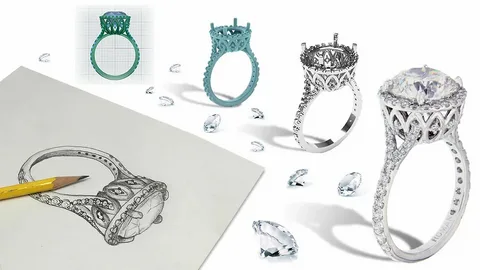
Digital systems may recommend design directions based on information such as desired forms, metals, colours, prior purchases or chosen references.
Artificial intelligence may also assist designers explore several versions of a notion. A simple design concept might be evolved in many versions with varying sizes, different arrangements of the gem-stones, or other ornamental elements. Then the designers may look at these ideas and choose the best route.
The examination of shifting customer preferences is another potential. Data allows manufacturers to get insight into larger patterns while still producing custom items. This may assist detect rising trends without pigeon-holing clients into cookie-cutter designs.
But Custom Jewelry Manufacturers personalisation should not be fully automatic. Jewellery is frequently emotionally and culturally important and human judgement is still required.
Luxury Digitalisation And Personalised Shopping Experiences
Perhaps the best job for AI is as a supporting tool, not a substitute for designers and craftspeople. Customers could be able to express their preferences in plain language or via visual references, and the digital systems might then transform those choices into design concepts.
This means that consumers who know what they want but don’t know the jewellery design terminology may now get personalised jewellery more easily. Today’s customers care about how items are manufactured, where the resources originate from and how long the final products are anticipated to endure.
Personalised jewellery is by nature more purposeful in its consuming practice. “Consumers can buy designs that will have lasting personal value rather than buying several pieces that could go out of style fairly quickly.”
In this regard, especially crucial is durability. A good piece may last for many years, minimising the need for regular replacement. And if the jewellery is also meaningful to them personally, then the probability that they’ll retain and wear it may rise even more.
Also, custom manufacturing may facilitate the reuse of existing resources. Sometimes you may use old jewellery, heirloom stones or other important elements into new creations. This means clients may change the look of a product while maintaining emotional ties.
Benefits of Custom Manufacturing for Wholesale Businesses
Technology may also help to more efficient production. More accuracy may also mean less waste of material and digital prototyping can eliminate the need for unneeded physical samples. Customers can be looking for items that reflect personal milestones, relationships, family background, cultural influences or personal accomplishments.
This trend will undoubtedly inspire greater narrative in jewellery design.” Instead than only looking at the look, designers may be more interested in how symbols, forms, jewels, engravings and other materials may tell a personal story.”
Customisation may also help connect the generations. Family jewellery may be reworked to keep aspects of significance, letting ancient materials and tales live on into current creations.
Signature jewellery is another sector that will undoubtedly expand. Jewellery might be something that changes every season, but we want customers to make items that they recognise and that become part of their particular identity.
The patterns predict a future of jewellery that won’t be driven by fashion cycles. Or personal importance may be as essential. Virtual consultations may assist clients to discuss ideas, exchange references and examine design concepts. Digital portfolios are inspiring, and interactive design tools may provide buyers the freedom to wander through a variety of options.
The buying experience may also become highly personalised. This would allow customers to be recommended options based on their tastes, yet still have influence over the final design.
Virtual visualisation helps eliminate ambiguity, letting buyers understand how multiple alternatives could work together. This may be very important when choosing gemstones, metal colours and dimensions of the design.
But digital ease shouldn’t take away the feeling of exclusivity that luxury has. Customers still appreciate personal attention, skilled advice and quality. Manufacturers’ dilemma is how to marry digital accessibility with a superior human experience.
It might be a hybrid paradigm where the tech does the visualisation and communication, and the experienced experts provide the creative consulting and craftsmanship.
That would mean a smoother customer experience from first concept to design development, manufacture, delivery and aftercare.
As digital luxury matures, personalisation may be one of the best ways for jewellery brands to distinguish themselves. Rather than just provide items they may provide experiences. The increasing desire for customised items can potentially make expert workmanship more desirable.
Custom Jewellery Creates a Stronger Brand Image
In a competitive jewellery industry, recognition is good. Customers need reasons to remember brand A over brand B. Unique jewellery might help a lot in that identification.
A bespoke collection might include graphic elements that repeat and become identified with a certain company. They might be particular forms, themes, textures, mixes of gemstones or finishing methods.
Initially the brand name may not be visible but with time buyers come to identify these features. This is one of the best benefits of creating your own exclusive jewellery line.
Customisation also helps the businesses to react to their particular clientele. For instance, a collection made for the youth client may have a distinct look than one intended for the classic luxury buyer.
Rather than having to adapt an established wholesale assortment, the company may think about its customers’ preferences when designing. Custom work takes a level of attention to detail that is not always possible with mass manufacturing. Each of these elements is important in itself: proportions, arrangement of stones, finish, comfort, and structural stability.
Artisans possess information that cannot be totally captured by software or equipment. They understand the behaviour of materials, the way surfaces should be completed and how little changes may make a difference to the end result.
So the future is unlikely to be a decision between technology and traditional craft. Instead, the sector will increasingly mix the two.
Digital instruments can also manage complicated computations and visualisation, while sophisticated manufacturing may enhance accuracy. Skilled craftsmen are then able to concentrate on creative choices, finishing, quality evaluation and the intricacies that give jewellery its character.
Customisation is useful not just in that it creates visually distinct items. It helps companies build a consistent design lexicon that consumers may recognise. A brand’s visual identity might be defined by a certain shape, gemstone arrangement, texture or metal finish.
Another big benefit is wholesale production. Customisation is frequently linked with one-of-a-kind, personally commissioned items, but wholesale bespoke jewellery combines the personalisation aspect with the potential to produce many copies. This makes it ideal for firms that want unique designs but yet need the quantity needed for sale.
Summary
It is a process that demands coordination between design, Custom Jewelry Manufacturers and brand teams. You have to take creative ideas and turn them into designs that are possible, marketable, and reproducible in many copies.
For companies today, this blend may create a closer connection between creative and business strategy. Jewellery is no longer a product but a means of communication about what the brand is about.
