


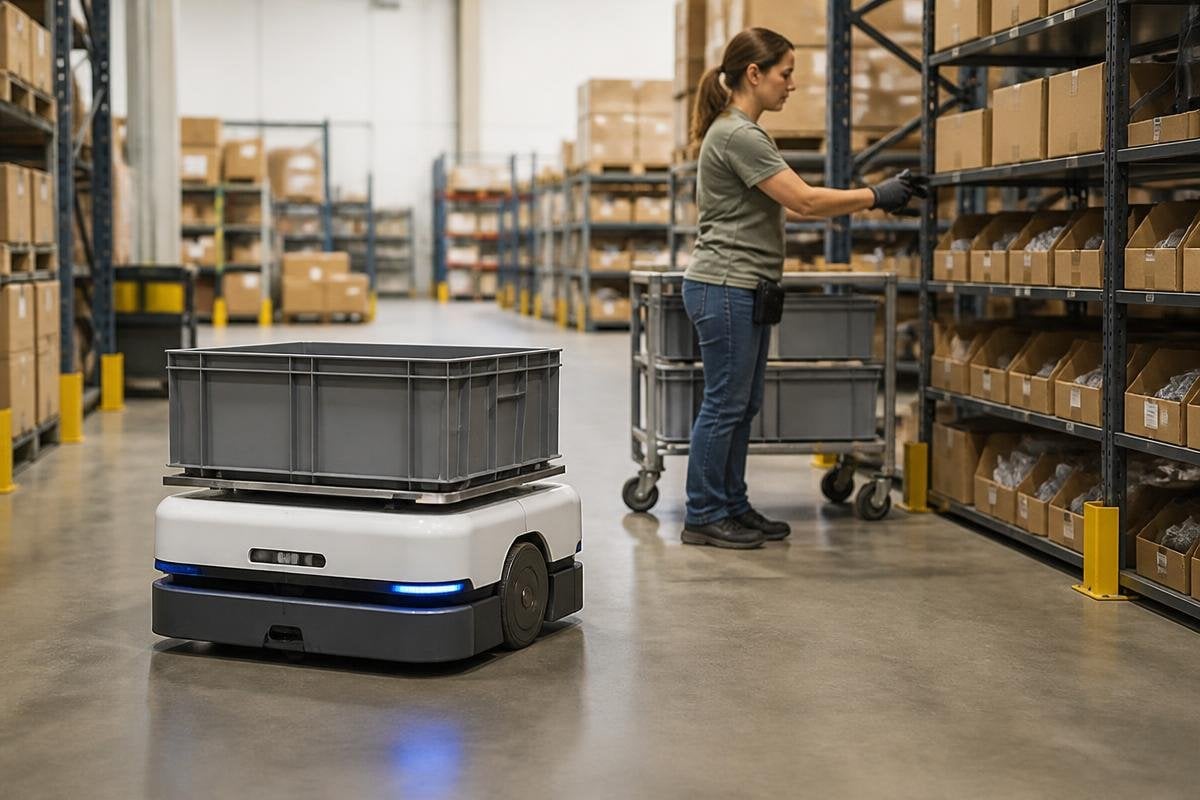
A robot can take over one task without taking over a whole job. That difference makes the question of jobs created versus jobs destroyed harder than a simple count.
- Robots remove some tasks, while people keep the wider job.
- New work appears around installation, repair, software, and safety.
- The result depends on the industry, local skills, and how quickly companies adopt machines.
A job is a bundle of tasks
A warehouse worker may pick items, check labels, move stock, report damage, and deal with an unusual order. An autonomous mobile robot can carry a tote across the building, but it doesn’t cover that whole list.
The same pattern applies to a factory arm. It can weld the same joint again and again, yet people still set the work area, check the weld, fix faults, and change the line for a new product. Robotics removes parts of work first. Full job removal takes a wider change in the process.
That distinction matters because a worker may lose the task that takes the most time while keeping the job under a different title.
A machine can also raise the number of goods a small team handles, which may support more output without creating the same number of new jobs.
Where new work appears
Robots need people before, during, and after installation. A company may need someone to map routes, connect sensors, set safety zones, write task rules, train staff, and inspect the machine.
Maintenance adds another layer. Motors wear, cameras get dirty, grippers need adjustment, and software faults can stop a line. Those tasks call for technicians who can read logs, test a failed part, and return the robot to service.
New demand can reach outside the factory. Robot makers need mechanical designers, controls engineers, field service teams, trainers, sales staff, and people who handle spare parts. The work may shift away from direct production toward support, design, and repair.
Timing causes the problem. A worker whose task disappears may not live near the new job or have the training it requires. A new position elsewhere doesn’t help much if the old position ends this month and training takes a year.
Why the job count stays uncertain
A company may buy robots for several reasons. It may want higher output, fewer injuries, more consistent quality, or production near its customers. The same purchase can reduce demand for one task and increase demand for another.
Prices matter too. A machine that costs too much will stay in a test area. A lower-cost system may spread through a plant and affect more workers. Energy use, maintenance, floor space, safety work, and software fees belong in that calculation.
Product demand sets the next limit. If automation lowers the cost of making a product and customers buy more of it, production may grow. If demand stays flat, the company may use robots to produce the same amount with fewer people.
A robot may remove one task while leaving the rest of a job in place. Robot24.com reporting on work puts the machine, company, and task behind a labor claim, so you can separate a measured result from a broad prediction.
A sound answer needs a defined place, time, and job group. It also needs the number of workers affected, the number of new roles, the hours worked, the training time, and the period used for the count. Without those details, a claim about total jobs is a forecast, not a measured result.
What workers and managers can check
The useful question is less “Will robots take jobs?” and more “Which tasks will change, and who gets the next task?” Use this check before accepting a job forecast:
- Name the task: Identify the work the robot will perform, rather than naming a whole occupation.
- Count the people affected: Include direct staff, contractors, maintenance teams, and nearby suppliers.
- Measure the time: Record hours removed, hours added, and the date each change starts.
- Check training: Ask who can move into the new role and how long the training takes.
- Track output: See if the company makes more goods, keeps output level, or cuts production.
- Set a review date: Recheck the figures after the system has run long enough to show normal faults and repair needs.
The answer depends on the rollout
Robotics will destroy some tasks. It will also create work that did not exist around the old process, though the new roles may require different skills and appear in a different place.
I wouldn’t trust a broad promise that robotics will create more jobs than it destroys without a defined industry, region, and time period. The useful test is local and specific: name the task, count the people, record the training, and check what happened after the robot ran for a full operating period.
